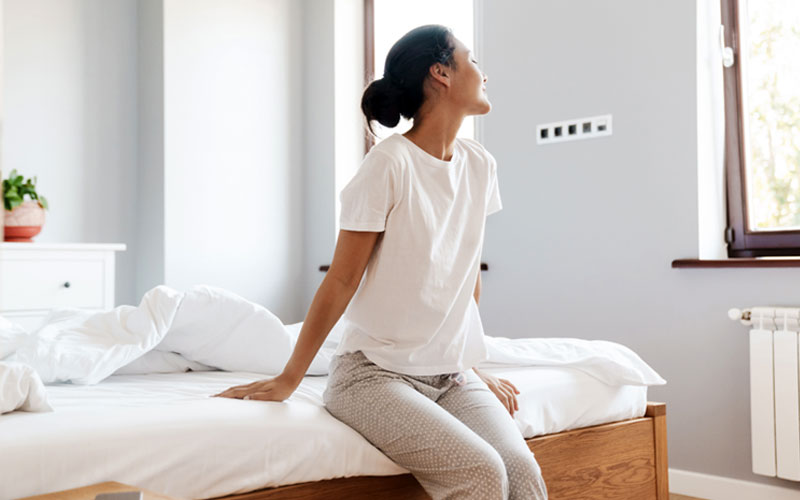
Getting enough hours in bed does not always mean waking up rested. If mornings regularly start with fatigue, headaches, or the feeling that sleep simply was not restorative, it may be worth looking more closely at what is happening overnight.
Sleep apnea is one possible explanation. Obstructive sleep apnea can cause repeated interruptions in breathing while you sleep, and some of the clearest signs may happen when you are not awake to notice them. An at-home sleep apnea test can offer a convenient way for appropriate patients to take the first step toward finding out whether sleep-disordered breathing may be affecting their nights.
When Poor Sleep May Be Worth Investigating
Occasional tiredness is normal. Persistent symptoms are different.
Signs commonly associated with obstructive sleep apnea include loud snoring, gasping or choking during sleep, pauses in breathing noticed by another person, excessive daytime sleepiness, morning headaches, and difficulty concentrating. Not everyone who snores has sleep apnea, and symptoms alone are not enough to confirm a diagnosis.
If these issues keep showing up, testing can provide more useful information than simply guessing why your sleep feels poor.
Why Testing Matters
Sleep apnea cannot be reliably identified by symptoms alone. Diagnosis generally requires information collected while a person is sleeping. Depending on the individual, that may involve an overnight sleep study in a clinic or a home sleep apnea test.
That distinction matters because getting tested is not the same as choosing a treatment. Testing helps establish whether obstructive sleep apnea may be present and gives a healthcare professional information that can guide what happens next.
For some adults with symptoms suggesting moderate to severe obstructive sleep apnea and without certain complicating medical conditions, the American Academy of Sleep Medicine recognizes home sleep apnea testing as an appropriate diagnostic option when a technically adequate device is used.
The Appeal of Testing at Home
For people who are appropriate candidates, at-home testing can remove some of the friction associated with spending a night in a sleep laboratory.
Instead, the test is completed in your usual sleeping environment. Home devices commonly record information such as airflow, breathing patterns, blood oxygen levels, and heart rate. The exact sensors and measurements depend on the test being used.
The process can be especially appealing to someone who wants a more convenient way to begin investigating possible sleep apnea without immediately arranging an overnight lab visit.
That convenience does not mean every home test is suitable for every person. People with certain medical conditions or more complex sleep concerns may need a full laboratory study instead. A home result that is negative, inconclusive, or technically inadequate may also need follow-up testing.
Getting Answers Is the Beginning, Not the Finish Line
A sleep apnea test does not make sleep better by itself. Its value is in providing information that can lead to the right next conversation.
If testing indicates obstructive sleep apnea, a healthcare professional can review the findings and discuss treatment approaches based on the type and severity of the condition. CompareTreatments currently features at-home providers that include professional review of sleep data and guidance around next steps, although the exact process varies by provider.
For someone who has spent months assuming that poor sleep is simply part of a busy schedule, getting objective information can be a meaningful change. It turns an uncertain problem into something that can actually be evaluated.
A Simple Place to Start
If ongoing snoring, daytime sleepiness, morning headaches, or interrupted breathing have made you question the quality of your sleep, an at-home sleep apnea test may be worth discussing with a healthcare professional.
And if home testing is appropriate for you, the next step does not have to be complicated. CompareTreatments.com lets you review at-home sleep apnea testing options side by side, making it easier to compare how providers handle testing, professional review, and follow-up before choosing where to begin.
Find Sleep Apnea Tests